
For businesses, ignoring the early signs of a rodent problem can have consequences that extend far beyond the presence of the pest itself. Rodents can contaminate products and surfaces, damage stock and infrastructure, create hygiene concerns and disrupt normal operations.
In customer-facing or highly regulated environments, there is also the potential impact on reputation and site standards.
Understanding these risks is why proactive commercial pest control should form part of ongoing facility management rather than only being considered after an infestation becomes established.
What Are the Risks of Ignoring a Rodent Problem?
Rodents are highly adaptable. Once they find reliable access to food, water and shelter, a commercial building can provide an environment in which they can remain relatively undisturbed.
Warehouses, hospitality businesses, healthcare facilities, food production sites, offices, retail premises and other commercial facilities can all be affected.
The longer signs of rodent activity are left uninvestigated, the greater the opportunity for the problem to spread.
Contamination of Food, Stock and Surfaces
One of the most significant concerns associated with rodents is contamination.
Rats and mice can move through drains, waste areas and other unhygienic environments before travelling across storage areas, floors, shelving and other surfaces.
Rodent droppings, urine and contaminated nesting materials can create additional hygiene risks within a facility.
For businesses that handle or store food, this is particularly important. Products or packaging showing evidence of rodent activity may need to be removed, even if the contents do not appear to have been directly consumed.
Good housekeeping, correct storage and effective rodent control can help businesses reduce these risks.
Damage to Stock and Packaging
Rodents are constantly searching for food and materials they can use for nesting.
This can result in damaged cardboard boxes, food packaging, bags, containers and other stored materials.
In warehouses and stockrooms, an infestation may not immediately be visible if rodents are active behind shelving, pallets or stored goods.
Regular inspection and monitoring can help businesses identify signs such as gnaw marks, droppings and damaged packaging before the issue becomes more widespread.
Damage to Cables and Infrastructure
The damage caused by rats and mice isn't limited to stock.
Rodents need to gnaw regularly because their teeth continue to grow throughout their lives. Electrical cables, insulation, timber and other building materials can all potentially be damaged.
In a commercial facility, this can turn a pest issue into a wider maintenance concern.
Plant rooms, ceiling voids, service areas and locations behind machinery can be particularly difficult to monitor without an appropriate pest management programme.
Hygiene and Compliance Concerns
Businesses are responsible for maintaining appropriate standards across their facilities, and pest activity can quickly become a concern where hygiene is critical.
This is particularly relevant for sectors such as:
- Food production and processing
- Hospitality and catering
- Healthcare
- Pharmaceutical environments
- Warehousing and distribution
- Retail
Evidence of uncontrolled pest activity can also create problems during inspections, customer audits or internal quality checks.
Having a documented pest management programme and responding quickly to evidence of rodents helps demonstrate that pest risks are being actively managed.
Disruption to Day-to-Day Operations
An established rodent problem can be disruptive to normal business activity.
Stock may need to be inspected or removed, affected areas may require additional cleaning, equipment may need to be moved, and potential entry points investigated.
The larger the affected area, the more complicated this can become.
For busy commercial facilities, early detection can therefore make a significant difference. Identifying activity before it becomes established allows the problem to be investigated and managed sooner.
Damage to Your Business's Reputation
For customer-facing organisations, a visible rat or mouse can have an immediate reputational impact.
Customers, patients, residents, guests and visitors are unlikely to view a rodent sighting as simply a pest control issue. It can influence their perception of the overall cleanliness and management of the facility.
Online reviews and social media also mean that negative experiences can quickly reach a wider audience.
For restaurants, hotels, retail businesses and other public-facing facilities in particular, proactive pest management plays an important role in protecting customer confidence.
A Small Problem Can Become a Larger Infestation
Perhaps the biggest reason not to ignore rodent activity is that rats and mice can reproduce quickly when conditions are suitable.
A commercial building can provide warmth, food, water and numerous undisturbed areas for nesting.
Rodents may establish themselves in wall cavities, ceilings, plant rooms, warehouses, storage areas or behind equipment long before regular sightings occur.
This is why seeing one rat or mouse should not automatically be treated as an isolated incident.
Investigating early signs gives businesses a better opportunity to determine where rodents are entering, what is attracting them and whether additional activity is present.
Why Proactive Rodent Control Makes Business Sense
Effective rodent management isn't simply about responding when a rat or mouse is spotted.
A preventative approach looks at the wider environment and considers why rodents might be attracted to a facility, how they could gain access and what can be done to reduce the likelihood of activity becoming established.
Identify Entry Points Before Rodents Find Them
Rodents can exploit surprisingly small gaps around a commercial building.
Potential entry points can include:
- Gaps beneath external doors
- Loading bays
- Damaged vents
- Pipework and cable penetrations
- Drainage systems
- Cracks or defects in the building exterior
- Roof and service areas
Regular site inspections and professional rodent proofing can help identify vulnerable areas and reduce opportunities for rats and mice to enter.
Don't Let Waste Attract Rodents
Waste management and pest prevention are closely linked.
Overflowing bins, loose food waste, damaged containers and spillages can provide a reliable food source for rodents.
External waste areas should be kept clean; bins should remain securely closed and collection schedules should be appropriate for the amount of waste being produced.
Detect Rodent Activity Earlier Through Monitoring
Because rodents tend to be most active when facilities are quiet, relying on employees to physically see a rat or mouse isn't always enough.
Ongoing pest monitoring can provide greater visibility over activity around a facility and help identify potential problems earlier.
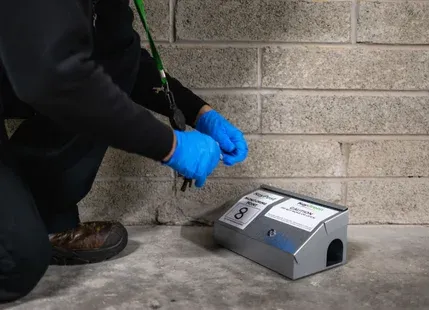
KeyGreen's pest management solutions include 24/7 digital pest monitoring and smart trapping technology, alongside professional inspections and preventative pest management programmes.
For larger facilities and multi-site organisations, this provides an additional layer of oversight even when areas are unoccupied.
Make Rodent Prevention Part of Facility Management
Rodent control is most effective when it isn't treated as a standalone response to an infestation.
Waste management, housekeeping, building maintenance, food storage, staff awareness and pest monitoring can all influence the likelihood of rodents becoming established.
Facility managers should consider pest prevention as part of their wider site-management programme and ensure that employees know how to report potential signs of activity.
What Should You Do if You See a Rat or Mouse at Work?
A sighting should be reported and investigated rather than simply assuming the rodent has left the building.
Look for additional evidence such as droppings, gnaw marks, damaged packaging or unusual activity around storage and waste areas.
Avoid disturbing potential nesting areas or attempting to resolve a commercial infestation without understanding the extent of the problem.
A professional pest inspection can help establish the source of the activity, identify potential entry points and determine the appropriate next steps.
